Understand configurators
Configurators: types, logic and when they fit
A configurator lets someone choose between options and get a result that can be delivered. Here are the most common types, and what sets them apart under the surface.
In short
- The type describes what the user does: chooses a product, answers needs questions, sees 3D or plans a room.
- The functions describe what is needed: rule checks, pricing, visualisation and what happens after the last choice.
- Maintaining rules and data determines much of the cost over time.
Contents
What is a configurator?
A configurator is a tool where a customer or salesperson chooses between options, and where the tool checks that the result can be manufactured, delivered and priced. The choices can be colour and size, but also output, materials, accessories or placement in a room.
What sets a configurator apart from an ordinary product list is the rules. Some choices exclude others, some require accessories and some change the price. The more such dependencies there are, the more value a configurator can add, and the more important it becomes how the rules are maintained.
What the user does
Four common types, seen from the user
The types often overlap. A room planner almost always shows 3D, and a sales configurator can include a product configurator.

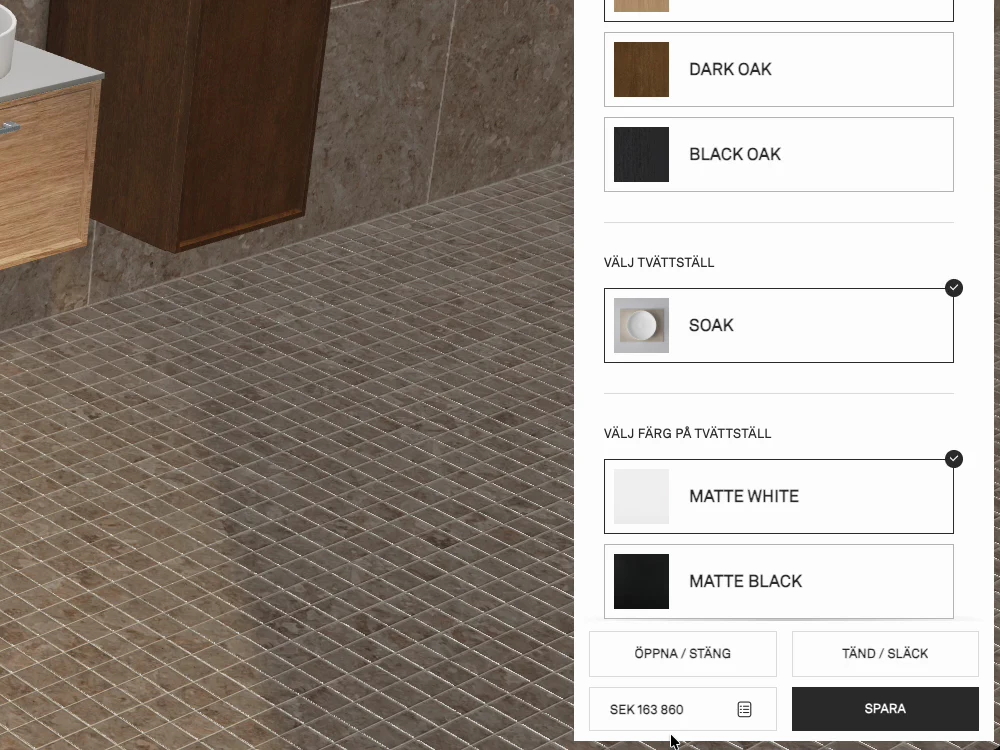
Product configurator
The customer chooses variants of a product and sees right away what can be combined.
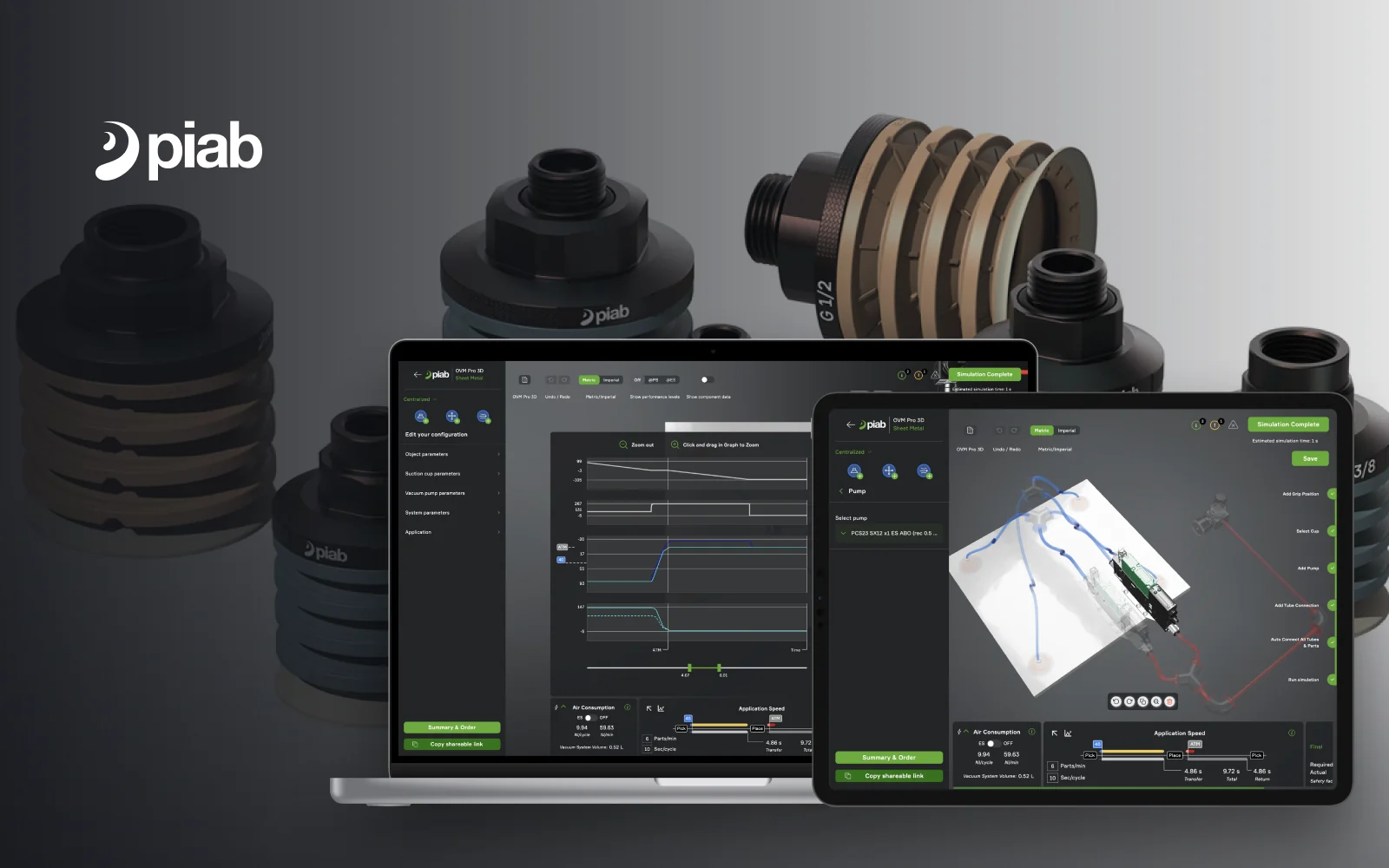
Sales configurator and CPQ
The salesperson or customer starts from needs and gets a proposal, a price and a quote.
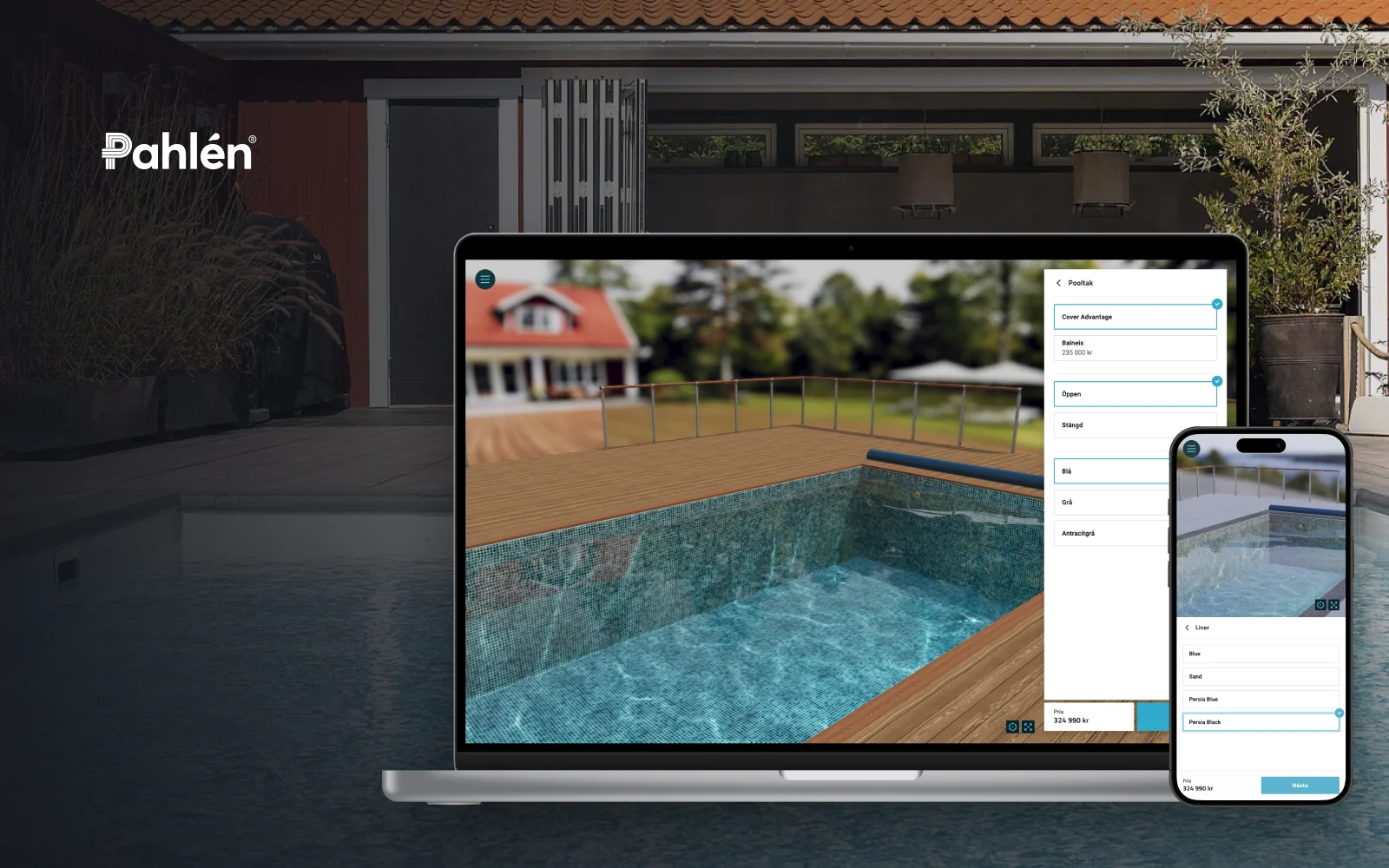
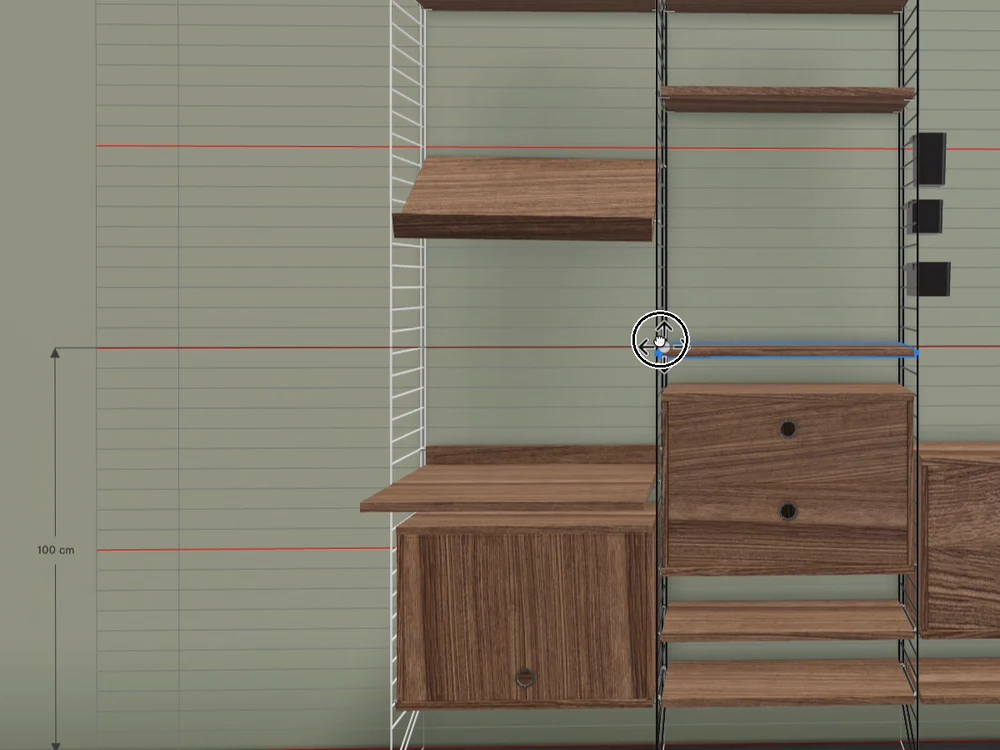
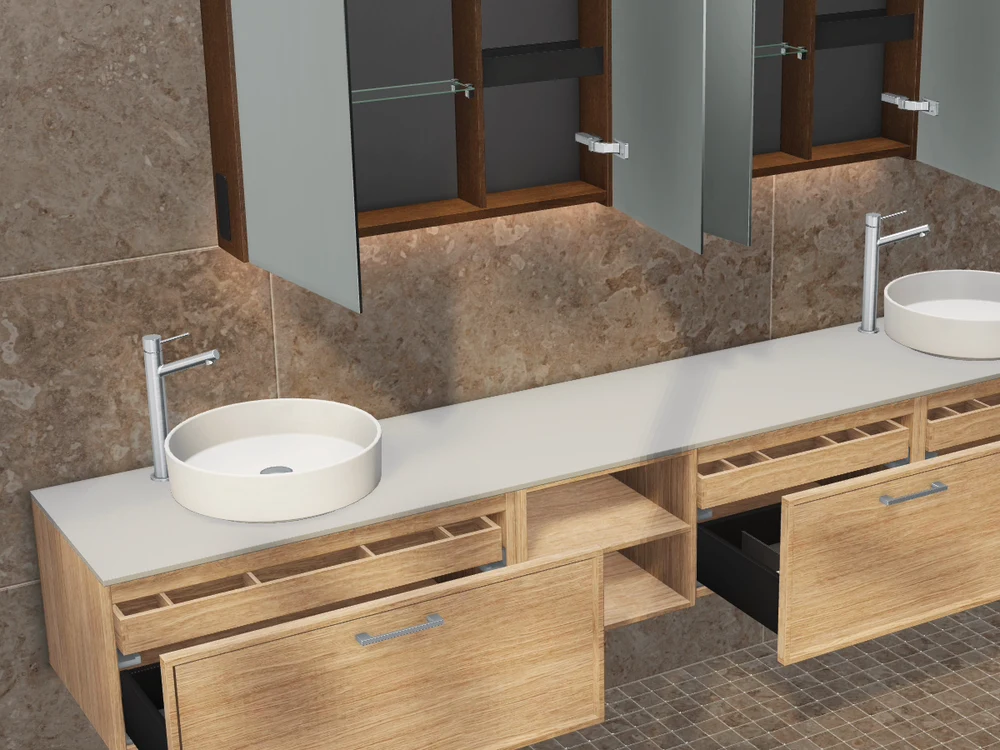
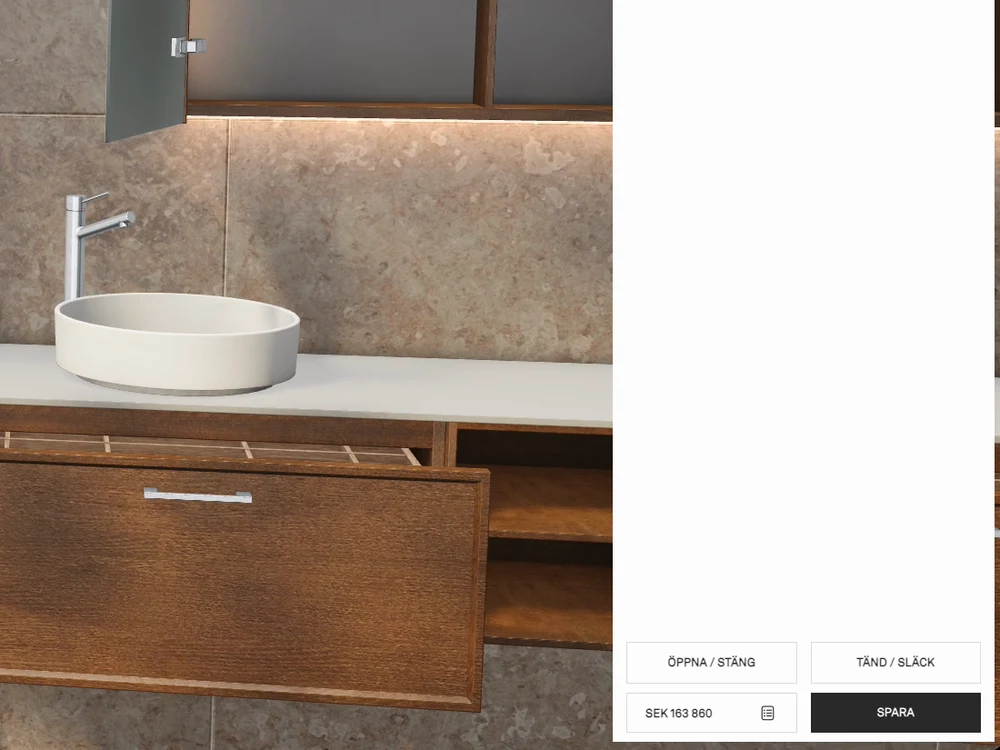
3D configurator
The choices are shown in 3D, so the customer sees the product before ordering.
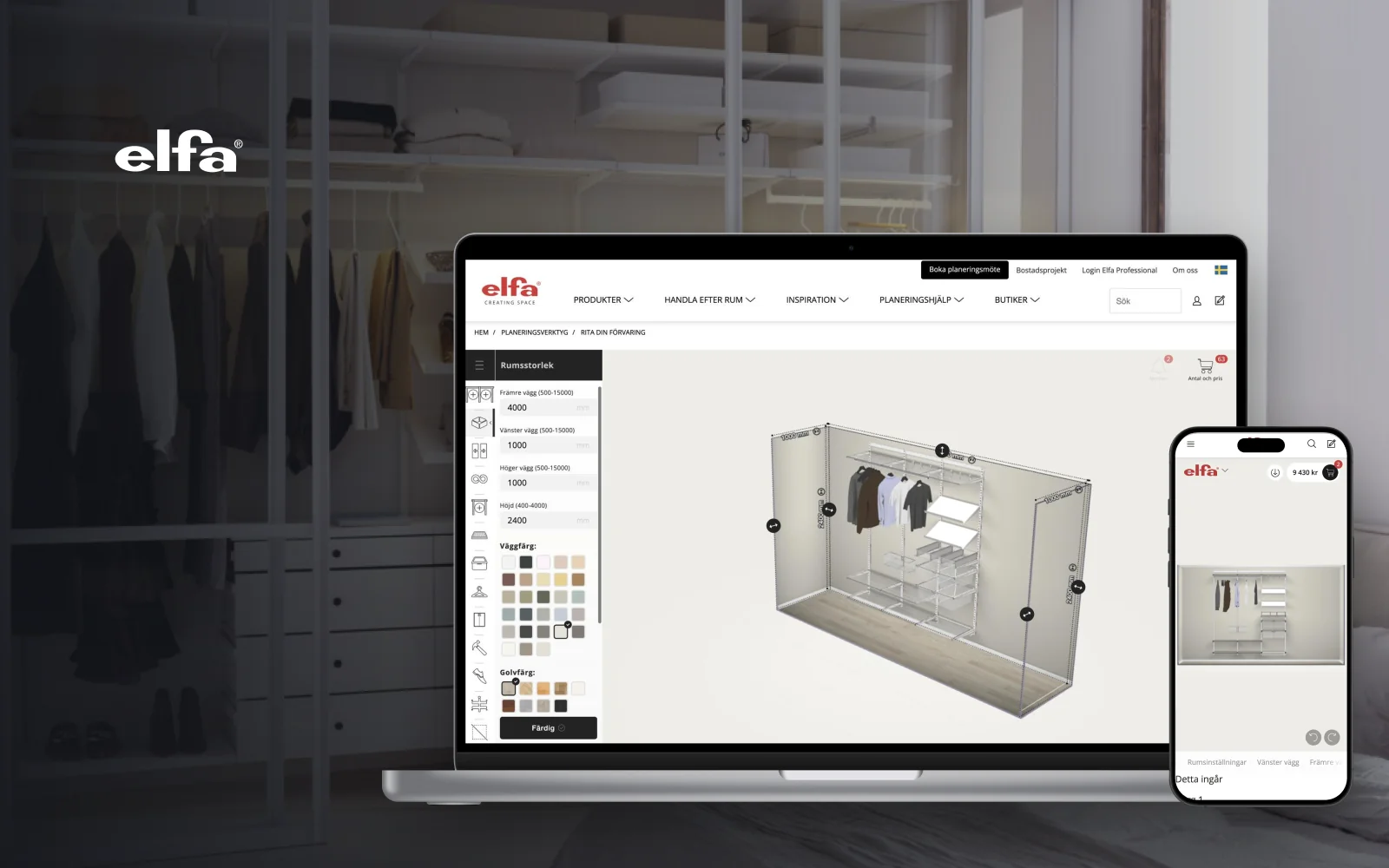
Room planner
The product is planned in a room or on a surface, with dimensions that must be right.
Three layers to keep apart
It is easy to confuse what the user sees with how the solution is built. That is why it helps to think in three layers. The same solution can be a product configurator, show 3D and be part of a CPQ flow at the same time.
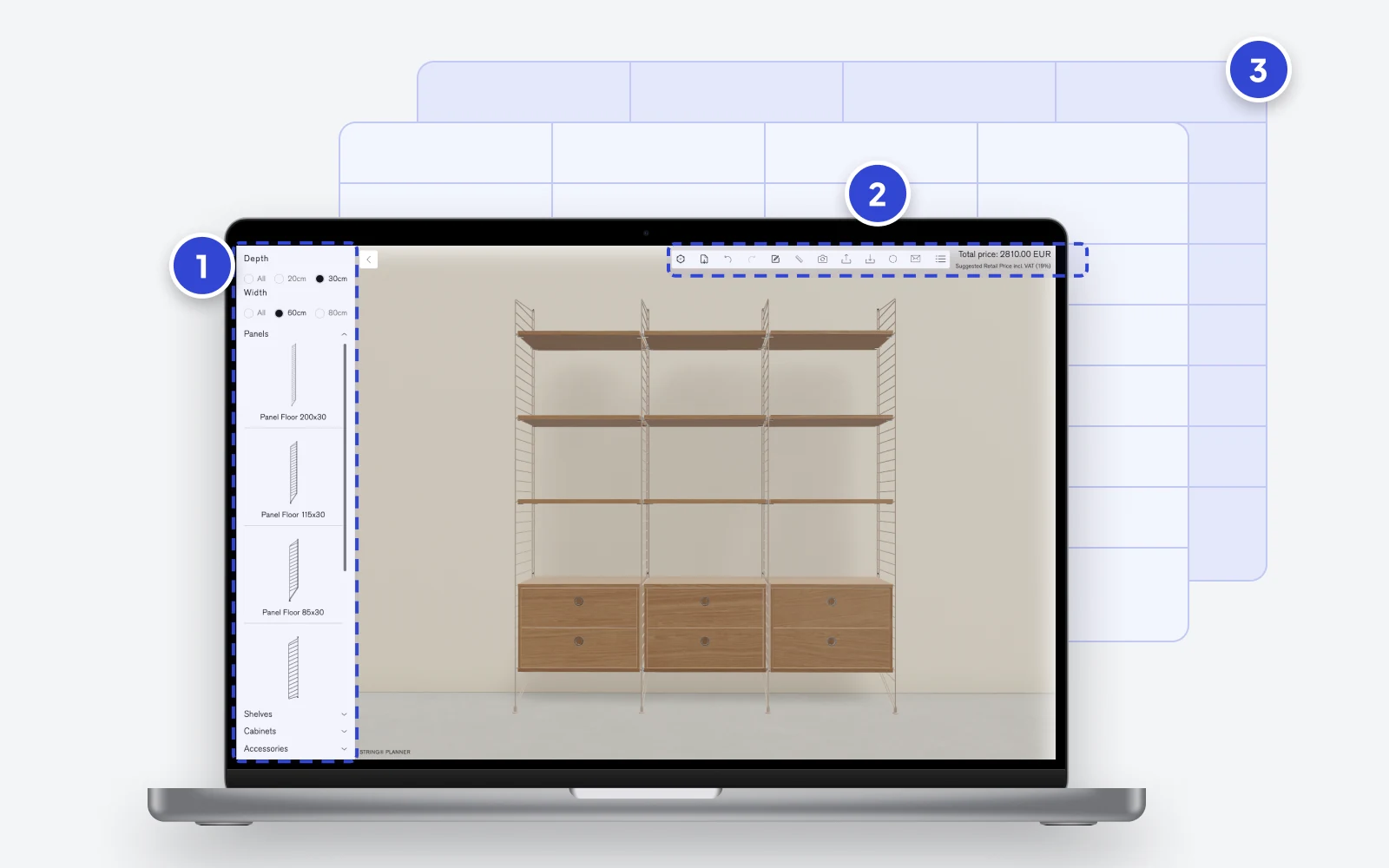
1. What the user does
Does the customer choose between variants, does the salesperson answer needs questions, or does someone draw a room? That decides which type of configurator you are talking about, and who the interface should be built for.
2. Which functions are needed
Rule checks: Which combinations are allowed, and why.
Pricing: List price, customer price, discounts and approvals.
Visualisation: Images, 2D or 3D.
Result: Shopping cart, quote, order in ERP or a specification.
Not everyone needs everything. An online shop may need rule checks and prices but no quotes, while a sales team needs pricing and approvals but not 3D.
3. How rules and data are maintained
This is where the biggest differences in cost over time are. Rules can live in a step-by-step flow, in tables of allowed combinations, in Excel, in a database or in a rules engine. Often several approaches are mixed.
| Way of holding the rules | Works well when | Keep in mind |
|---|---|---|
| Step-by-step flow | The choices have a natural order and are few. | If the rules are in the code, changes require a developer. How changing an early choice works depends on how the flow is built. |
| Tables of allowed combinations | The components are few and clear. | The tables grow quickly and do not say why something does not fit. |
| Excel | An internal tool for a smaller group. | Hard to share with customers online and vulnerable if one person owns the file. |
| Database of valid combinations | All solutions can be listed in advance. | Many options create many combinations, and it can be hard to explain why a choice is not possible. |
| Rules engine | The range is large and changes often. | A well-maintained rule model can make changes easier, but requires skills in modelling rules, either in-house or at the supplier. |
Ask every supplier where the rules live, who can change them and how a change is tested before it is published. The answers tell you more than a feature list.
How do you choose?
Do not start with the technology. Start with three questions:
1
Who will use the configurator?
Customers online, your own salespeople or dealers place different demands on how the questions are asked.
2
What should happen after the last choice?
A quote, an order in ERP, a drawing or a parts list determines which systems are involved.
3
How often does the range change?
The more often, the more important it is that the rules can be changed without a developer.
If the products are few and rarely change, a simpler form may be enough. If the product data is unstructured, that is often where the work should start, before choosing a configurator.
New to the topic? Start with what a configurator is and which types there are, or look up the terms in the glossary. Want to see the principles in everyday life? Read about configurators you already know.
Frequently asked questions
What is the difference between a configurator and CPQ?
CPQ stands for configure, price, quote. A configurator can exist without prices, but CPQ always includes some form of configuration.
Do we need 3D?
Not always. 3D adds the most value when the buyer needs to see the result to understand it or to dare to order. For technical options without a visible difference, images or text are often enough.
Can we start with Excel and build on that?
Yes, and many do. The important thing is that the rules are documented so that they can be moved, rather than hidden in formulas.